Fitment and part-number search: helping shoppers find the right fit without knowing the part number
A shopper who needs a specific part almost always knows the problem they are solving. What they rarely have is the exact code your catalog uses to describe it.
 Adrian LunaSVP of Growth, Webscale AI
A shopper who searches for a crossbow string, a compressor part or a specific automotive component almost always knows exactly what problem they are solving. What they usually do not have is the manufacturer’s part number, the exact spec sheet term or the precise phrase your catalog uses to describe it. That gap, between knowing what you need and knowing what to type, is where fitment-dependent catalogs lose sales that keyword search will never recover on its own.
Why fitment breaks keyword search in a specific way
Most product discovery problems come from vocabulary mismatch. Fitment problems come from something more structural. Fitment adds a second requirement on top of the product itself. The product also has to be correct for something the shopper already owns, their vehicle, their equipment model, their existing setup.
Each of these is a compatibility question wearing the clothes of a product search, and a keyword engine has no field to check that against.
“A crossbow string for a bow I bought three seasons ago.” “The part number stamped on the side of my compressor, but I can only read half of it.” “Brake pads for a 2019 model, but I do not know the trim level.” Each of these is a compatibility question wearing the clothes of a product search, and a keyword engine has no field to check that against. Wildcard matching against a large catalog tends to return one of two bad outcomes: nothing, or a wall of technically-matching, actually-wrong results that force the shopper to guess.
That guess is expensive in both directions. Guess wrong and the shopper orders the incorrect part, which turns into a return, a support ticket or a review. Guess right and it was still slower and more stressful than it needed to be. Either way, if the answer required a phone call or an email to get right, the self-service channel already failed.

The code is right there on the part. Half legible, and no field in the catalog to match it against.
Why the category has built single-purpose tools around this
Fitment is common enough as a failure pattern that an entire category of point solutions exists just to solve it. Year Make Model widgets and VIN-lookup tools let a shopper select or enter their vehicle once, then filter a catalog down to only compatible parts. They work well for exactly the pattern they were built for.
The limitation is in the name. A YMM widget solves vehicle fitment. It does not answer a spec question, compare two compatible options, check current stock, or hand a shopper off to an order-status question in the same conversation. A shopper who has a fitment question today and a shipping question tomorrow ends up bouncing between a filter widget, a search bar and a support chat, three separate tools stitched together at the shopper’s expense.
What changes when fitment is one part of a wider conversation
The fix is not to reject fitment widgets outright. It is to recognize that fitment is one of several things a shopper needs answered in the same conversation, and to handle it inside a system built for the whole discovery-to-decision arc rather than one narrow slice of it.
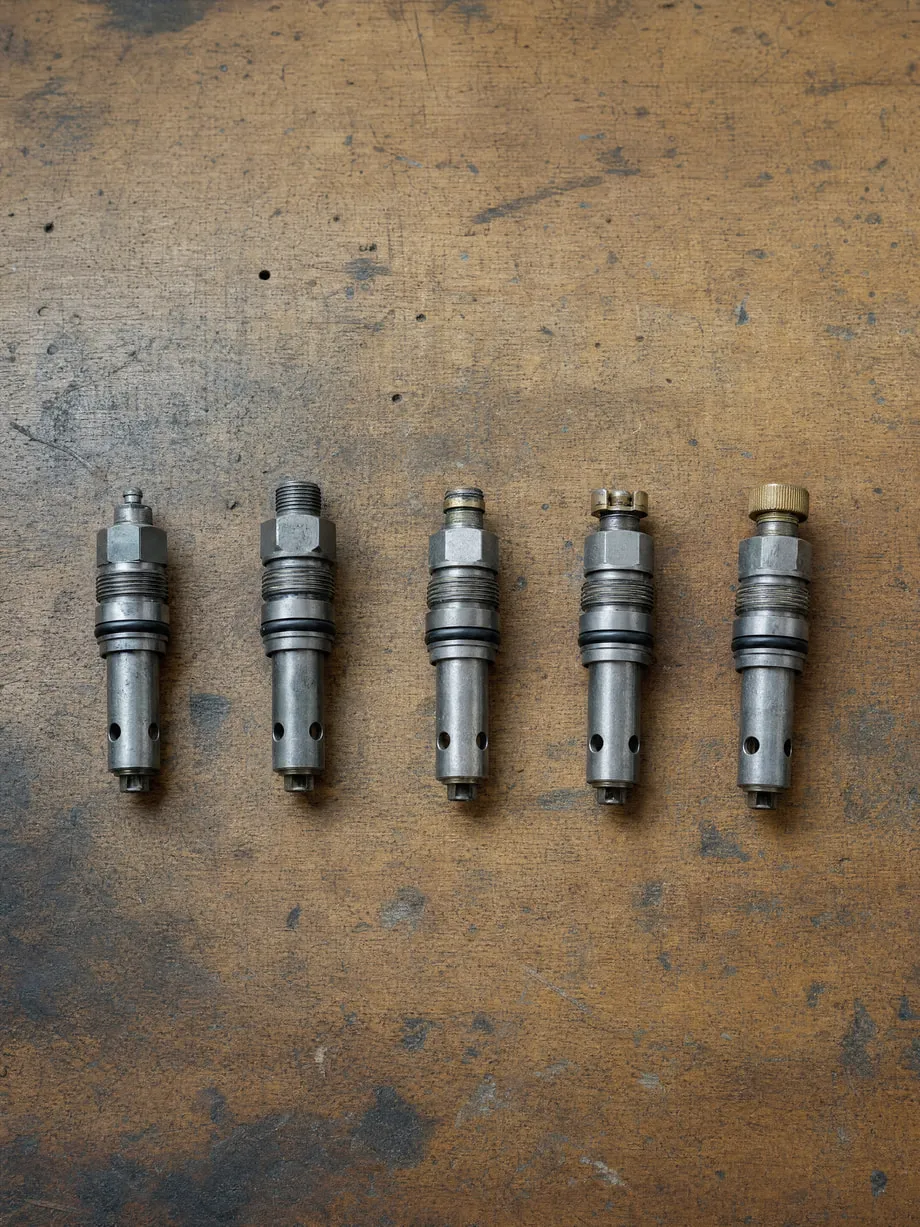
Four parts, one correct answer. The comparison a shopper should not have to make alone.
Our AI Shopping Assistant runs Product Discovery and Product Q&A as agents inside the same interface, grounded in live catalog and inventory data. A shopper can describe a compatibility need in plain language, get matched against the current catalog, ask a follow-up spec question, and get an answer that points back to the specific product copy or documentation that supports it. Merchants running large or technical catalogs configure agent behavior per use case, so fitment logic, compatibility rules and category-specific terminology are handled the way the category actually requires, not with generic product-search defaults.
We have watched this exact pattern play out in pilot sessions with a specialty outdoor equipment retailer and an automotive parts merchant, both running deep, fitment-heavy catalogs on Magento. In both cases, the shoppers who struggled most were not confused about what they wanted. They were stuck translating that need into a query the search bar could understand.
If fitment or compatibility questions are already showing up as your team’s most common support tickets, that is a signal worth acting on before your next planning cycle. Book a demo to see how Product Discovery handles fitment against your own catalog.



Before you take this to your team
Related but more specific. General zero-result failures usually come from vocabulary mismatch. Fitment failures come from a compatibility requirement the catalog cannot check against a single search string. See our broader look at why "no results found" costs you ready buyers for the wider pattern.
No. A fitment widget can stay in place for shoppers who prefer selecting a vehicle or model directly. Conversational discovery adds a path for shoppers who would rather describe the problem, and both can draw on the same catalog and compatibility data underneath.
No. The same pattern shows up anywhere a product has to be correct for something else the shopper owns, uses or is replacing, including outdoor equipment, industrial parts and specialty hardware.
A chatbot deflects to a decision tree or a knowledge base article. What we are describing works from live catalog and inventory data and is built to carry a shopper from a question through to a decision. We cover that distinction directly in chatbot or AI shopping assistant, what actually separates them.
Put fitment questions to your own catalog
If compatibility questions are already your team's most common support tickets, that is a signal worth acting on before your next planning cycle.