
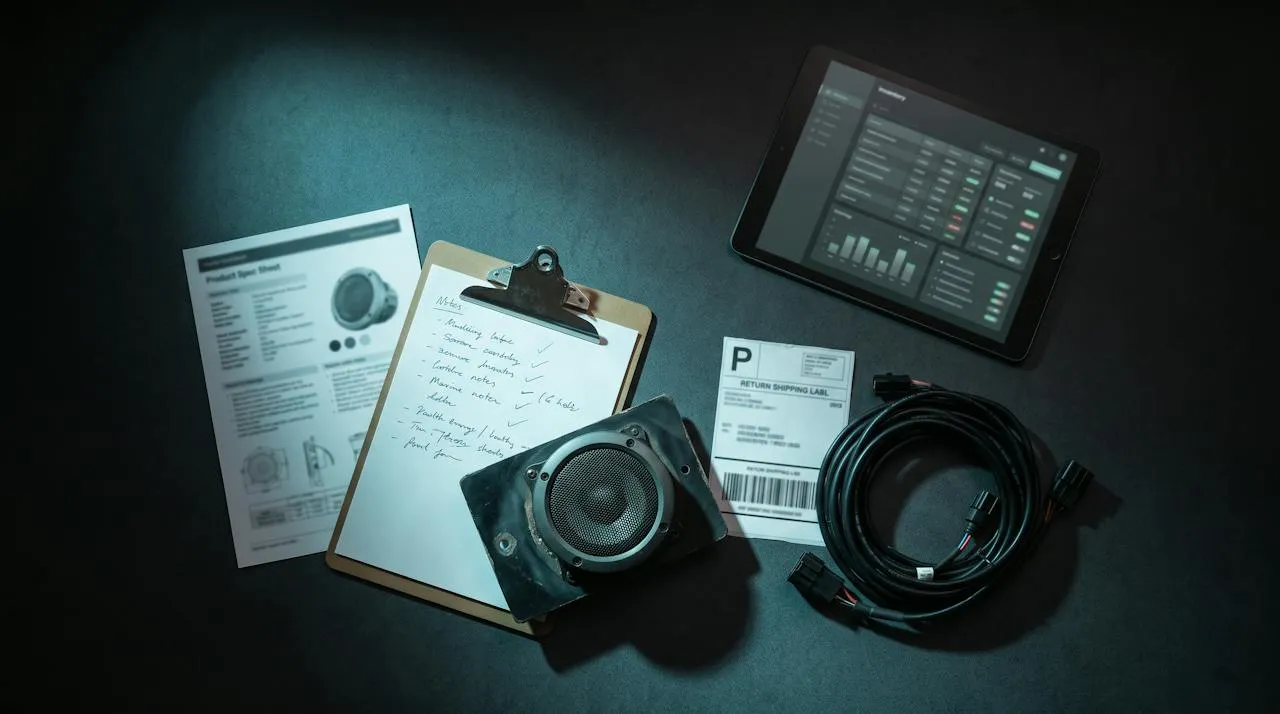
When an AI shopping assistant tells a shopper the wrong price, recommends a variant that sold out yesterday or says a part fits when it does not, the instinct is to blame the model. In most cases the model did exactly what it was built to do. It answered from the data it was given. The right answer was not in that data.
Why do AI shopping assistants give wrong product answers?
An AI shopping assistant gives wrong product answers mainly because the correct information is missing from what it reads. Most assistants read a copy of the product page or a product feed. That copy was built for a person browsing a website. It leaves out much of what a shopper asks in conversation.
Adobe Digital Insights measured the average retail product page as about 66% readable to AI in Q1 2026. A shopper in conversation asks precisely the questions that live in the other third.
How readable the average retail product page is to AI.
Adobe Digital Insights, AI Visibility, Q1 2026Where the missing answers live
The answers an assistant gets wrong usually sit somewhere other than the product page:
- Back-office systems. Variant-level inventory, contract and tiered pricing, order status and return eligibility live in the ERP, the OMS and the returns portal.
- Spec sheets and manuals. Salt water ratings, load limits, materials and dimensions often exist only in a PDF linked from the page or held by the manufacturer.
- Product expert knowledge. Which wiring kit goes with which unit, whether a boot runs narrow, whether a part fits a factory cutout. This knowledge lives with your associates, installers and support team.
- Policies and support history. Shipping exceptions, warranty terms and the answer to a question your team has handled a hundred times sit in the help desk.
A site scrape cannot recover any of this, because none of it was ever on the site.
How missing data shows up in an AI assistant’s answers
Missing data rarely announces itself. It shows up as answers that look fine at a glance:
- Wrong variant. The page lists the parent product, so the assistant says a color is in stock when only one size is.
- Wrong price. The assistant quotes list price to a B2B buyer whose contract price lives in the ERP.
- Generic answers. Asked about fit or compatibility, the assistant restates the marketing copy because nothing more specific exists in its data.
- Refusals that look like ignorance. The assistant says it cannot help with a question your best associate answers in seconds.
Each of these costs a sale or creates a return. Each one also points at a specific gap in your data.
Why prompt tuning rarely fixes wrong answers
Prompt changes can make an assistant more cautious, more concise or more on-brand. They cannot supply a fact. If the contract price is in the ERP and the assistant cannot read the ERP, no instruction will produce the right price.
Other vendors in the category have reached the same conclusion. Alhena AI’s own guidance on catalog quality describes accuracy as a catalog problem and says its assistant marks fields it cannot determine rather than filling them in. That is a sensible guardrail. It still leaves the merchant to find and fill the gap.
A refusal tells you exactly which data is missing. A confident wrong answer hides it.
How to fix wrong AI product answers upstream
The durable fix is to give the assistant the missing third, kept current:
- List the questions shoppers actually ask. Your support tickets and chat logs already hold them. Sort by frequency and by revenue at stake.
- Find where each answer lives. For every question, name the system or person that holds the true answer: the PIM, the ERP, a spec sheet, a returns policy or an expert.
- Bring those sources together. Map each source into one context the assistant reads, with each fact coming from the system that owns it.
- Replace exports with a live path. Inventory and pricing need to be current at the moment the shopper asks, not as of last night.
- Read real conversations after launch. Every refusal and correction is a pointer to the next gap.
This is the work Webscale AI’s Forward Deployed Engineers do with a merchant’s team before the AI Shopping Assistant goes live. They audit the catalog, interview product experts and map every source into the Commerce Context Engine, which keeps that data complete and live for every channel. It is the same foundation agentic commerce depends on everywhere else a shopper asks.



Before you take this to your team
Usually because the correct answer is missing from the data it reads. The average retail product page is only about 66% readable to AI, according to Adobe Digital Insights. The rest lives in back-office systems, spec sheets and the knowledge of your product experts. An assistant that only reads the product page will guess or refuse when the answer is somewhere else.
Rarely. Prompt changes can make an assistant more careful, but they cannot give it a fact that is not in its data. If the contract price lives in the ERP or the compatibility rule lives in an installer's head, the fix is getting that information into the data the assistant reads.
Webscale AI starts with the data. Forward Deployed Engineers audit the catalog to find what the assistant cannot answer today and where each answer actually lives, then the Commerce Context Engine brings those sources together and keeps them live. The AI Shopping Assistant answers from that context, so stock, pricing and policy come from the system that owns each fact.
Stale or partial data. A nightly product export can be hours out of date. Many product pages also show the parent product rather than the variant the shopper wants. Live inventory and pricing at the variant level fixes most of these errors.
Yes. A clear refusal is better than a confident wrong answer, especially on fit, safety and compatibility. A refusal also tells you exactly which data is missing, which makes it a useful signal.
Find out what your assistant cannot answer today
Bring the questions your customers ask most often. A catalog audit shows which ones your data can answer and where the rest of the answers live.